
Did you know that people spend close to 90 percent of their time indoors, yet indoor air can be two to five times more polluted than outdoor air? That single fact changes how we should think about our homes.
Comfort is not only about temperature or furniture, it is about how light enters a room and how air moves through it.
Light and airflow quietly influence sleep quality, focus, mood, and even long-term health.
When these two elements work together, homes feel calmer, fresher, and easier to live in.
This guide looks at how light and airflow form a natural comfort formula, how to design for both, and how small changes can make a noticeable difference in everyday living.
Why Light and Airflow Matter More Than We Realize
Homes are often designed around square footage and aesthetics, while natural comfort is treated as a bonus.
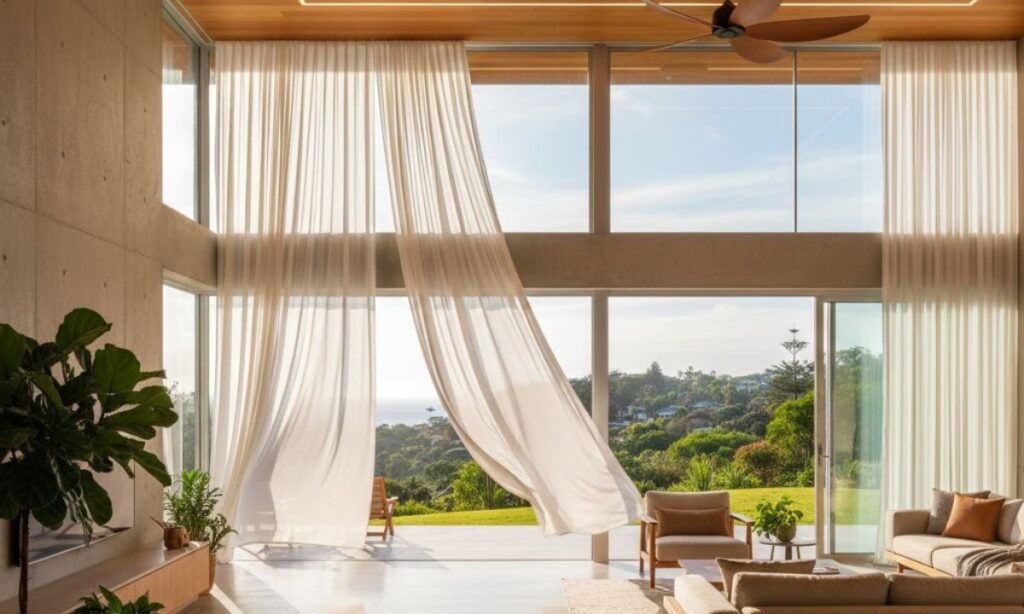
Light and airflow are not extras, they are fundamental environmental factors that shape how the body responds indoors. Natural light regulates circadian rhythms, while steady airflow reduces moisture, odors, and airborne pollutants.
Poor airflow often leads to stale air, condensation, and fatigue. Inadequate light can disrupt sleep cycles and affect concentration.
Together, these issues create homes that look fine but feel heavy or draining over time.
Once people improve these basics, they often notice fewer headaches, better sleep, and spaces that feel welcoming without relying on constant mechanical adjustments.
Key reasons these elements matter daily:
- Natural light supports hormone balance and sleep patterns.
- Moving air lowers indoor humidity and pollutant buildup.
- Combined comfort reduces reliance on artificial lighting and HVAC systems.
Understanding the Natural Comfort Formula in Practice
The natural comfort formula is simple in theory but powerful in practice.
Light and airflow should complement each other, not compete. Bright rooms without airflow can feel stuffy, while breezy spaces without adequate light feel cold or unfinished.
In well-balanced homes, daylight penetrates deep into living areas, while airflow gently refreshes the space without drafts.
This balance often depends on layout decisions, window placement, and how interior spaces connect.
Many modern housing solutions focus on these fundamentals rather than decorative fixes.
This is where housing concepts that prioritize openness and connection to the outdoors stand out.
Homes designed with this mindset, such as those seen at foliahomes.com, often feel healthier because light and airflow are considered from the start rather than added later.
The result is comfort that feels natural and consistent throughout the day.
A functional comfort balance usually includes:
- Daylight reaching multiple zones, not just window-adjacent areas.
- Airflow paths that move across rooms, not into dead ends.
- Minimal reliance on artificial fixes during mild seasons.
How Natural Light Shapes Healthier Indoor Living
Natural light does far more than brighten a room. It directly affects the body’s internal clock, influencing sleep quality, energy levels, and even digestion. Rooms with good daylight tend to feel larger, cleaner, and more inviting, even when minimally furnished.
Morning light helps regulate melatonin production, while consistent daylight exposure improves focus during work hours. Homes that lack sufficient natural light often compensate with artificial lighting, which does not provide the same biological benefits.
Designing for better light does not always mean larger windows. Orientation, reflective surfaces, and room depth all play roles in how daylight travels indoors.
Practical ways light improves living quality:
- Supports regular sleep and wake cycles.
- Reduces eye strain during daytime activities.
- Enhances mood and perceived cleanliness of spaces.
Airflow as the Invisible Comfort Layer
Airflow is often overlooked because it is invisible when done right. Yet it is one of the strongest factors in indoor comfort.
Proper airflow prevents stagnant air, controls humidity, and reduces the concentration of indoor pollutants released from furniture, cleaning products, and cooking.
Homes with poor airflow often rely heavily on air conditioning or dehumidifiers, which treat symptoms rather than causes.
Natural airflow uses pressure differences, window placement, and internal openings to keep air moving gently and continuously.
A home that breathes well usually feels fresher even when temperatures fluctuate slightly. This natural tolerance is part of what makes spaces feel healthy rather than tightly controlled.
Signs of effective airflow include:
- No lingering odors after cooking.
- Reduced condensation on windows and walls.
- Even temperature distribution between rooms.
Designing Rooms That Work With Light and Air
Individual rooms respond differently to light and airflow, depending on their function.
Bedrooms benefit from softer morning light and gentle ventilation, while kitchens and living areas need stronger airflow and broader daylight exposure.
Rather than treating each room separately, successful homes consider how air and light move from one space to another.
Open transitions, interior windows, and aligned doorways all contribute to better circulation.
Design choices that seem minor often have a large impact on daily comfort. The goal is not perfection but balance.
Room-specific considerations often include:
- Bedrooms placed to receive morning light, not harsh afternoon sun.
- Kitchens positioned for easy ventilation paths.
- Living spaces connected to multiple light sources.
The Role of Windows, Openings, and Orientation
Windows do more than frame views. Their size, placement, and orientation determine how light and air behave inside a home.
South-facing windows typically provide steady daylight, while cross-facing openings allow air to flow naturally.
Orientation mistakes can lead to overheating, glare, or stagnant air zones. Thoughtful placement solves many of these issues without additional systems.
Common window and opening strategies
- Larger openings on primary living sides of the home.
- Smaller, operable windows for controlled ventilation.
- Aligning openings to create cross-ventilation paths.
Cross-ventilation occurs when air enters through one opening and exits through another, driven by pressure differences rather than mechanical force.
This principle is one of the most effective natural cooling strategies available.
Balancing Comfort With Energy Efficiency
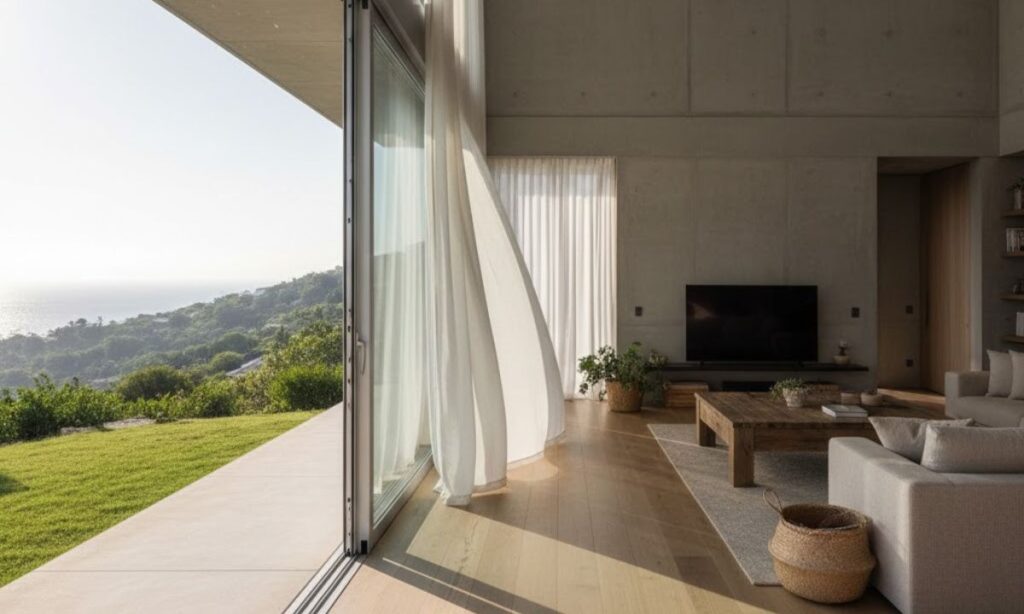
Light and airflow are often discussed separately from energy efficiency, but they are deeply connected. Homes that rely more on daylight and natural ventilation typically consume less energy for lighting, heating, and cooling.
That does not mean eliminating technology. Instead, it means using systems as support rather than crutches. Mechanical systems perform better when the home itself works with natural conditions.
Natural comfort vs mechanical dependence
| Aspect | Natural Comfort Focus | Mechanical Dependence |
| Lighting | Daylight-driven | Artificial lighting dominant |
| Ventilation | Passive airflow | Constant powered systems |
| Energy use | Lower baseline demand | Higher ongoing consumption |
Homes that integrate natural comfort principles often feel calmer and cost less to operate over time.
Indoor Air Quality Facts
Many people assume outdoor pollution is the primary concern, yet indoor environments often contain higher concentrations of pollutants due to limited airflow and material off-gassing.
Did you know?
- Indoor air can be more polluted than outdoor air in urban areas.
- Common furniture materials release volatile organic compounds.
- Natural ventilation significantly reduces indoor pollutant levels.
These facts explain why airflow plays such a critical role in long-term comfort and health.
Small Changes That Make a Big Difference
Not every improvement requires renovation. Many homes can significantly improve light and airflow through small, deliberate adjustments.
Rearranging furniture, changing window treatments, or adjusting how doors are used can alter airflow patterns noticeably.
Awareness is often the missing step. Once people observe how air and light behave during different times of day, improvements become intuitive.
Simple adjustments worth trying:
- Keep interior doors open during mild weather.
- Use lighter window coverings to reflect daylight deeper inside.
- Avoid blocking windows with large furniture.
These changes often produce immediate improvements in how a home feels.
Creating Homes That Feel Good to Live In
Light and airflow are not trends, they are timeless comfort principles. When homes support natural rhythms instead of fighting them, daily life feels easier.
Spaces stay fresher, energy levels improve, and reliance on artificial fixes decreases.
Healthy homes do not need to be complex. They need thoughtful design, awareness of natural forces, and respect for how people actually live indoors.
When light and airflow work together, comfort becomes something you feel without thinking about it.
That quiet sense of ease is often the clearest sign that a home is truly working for the people inside it.