
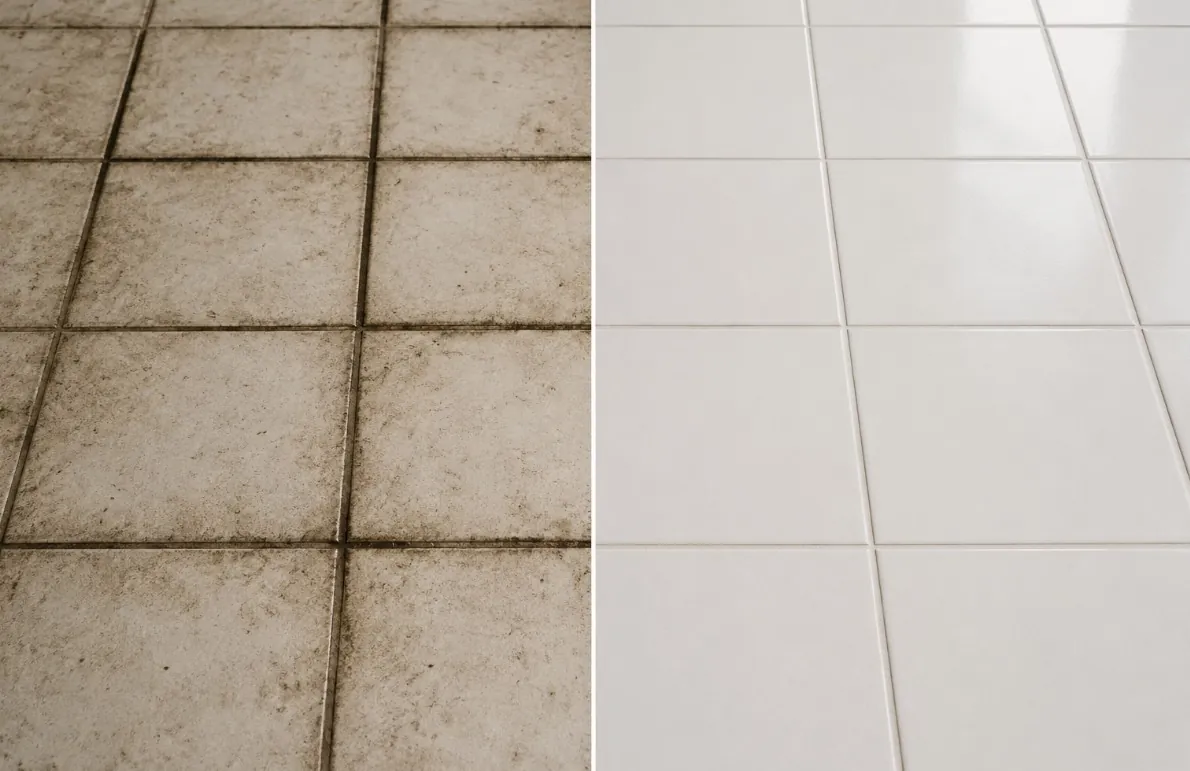
A freshly mopped floor can still look dirty. Dark grout lines remain, traffic lanes look dull, and the surface seems to lose its clean appearance as soon as it dries. Why does that happen, and why does another pass with the mop rarely solve it?
A 2006 pilot study published in Science of the Total Environment found that in one-time footwear track-in tests, most deposited soil landed within the first five strides. Repeated tracking spread contamination farther.
This guide explains why routine mopping reaches a limit, what restorative tile and grout cleaning does differently, and how to keep floors cleaner for longer.
Here’s What’s Inside
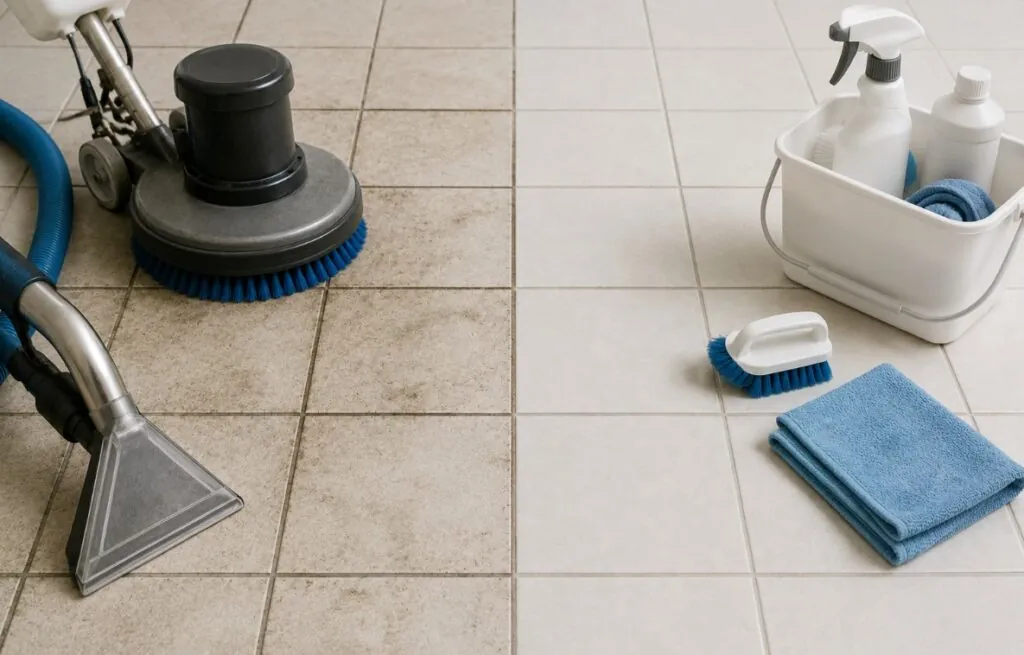
Daily mopping is useful, but it tackles a different job from deep cleaning. Routine maintenance removes fresh spills and light surface soil. It is less effective once grease, fine grit, cleaner residue, and tracked-in dirt have settled into grout joints or textured tile.
In this guide, you’ll learn:
- why grout darkens faster than nearby tile;
- how cleaner residue can make a floor soil again quickly;
- what agitation and extraction change;
- how to choose appropriate cleaning chemistry;
- when restorative cleaning makes sense;
- how to protect the result afterward.
The practical goal is simple: cleaner-looking floors, fewer repeated complaints about appearance, easier daily maintenance, and more time before regrouting or replacement has to be considered. Deep cleaning is not a substitute for daily care. It gives daily care a cleaner surface to maintain.
Why Mopping Stops Working on Dark Grout Lines
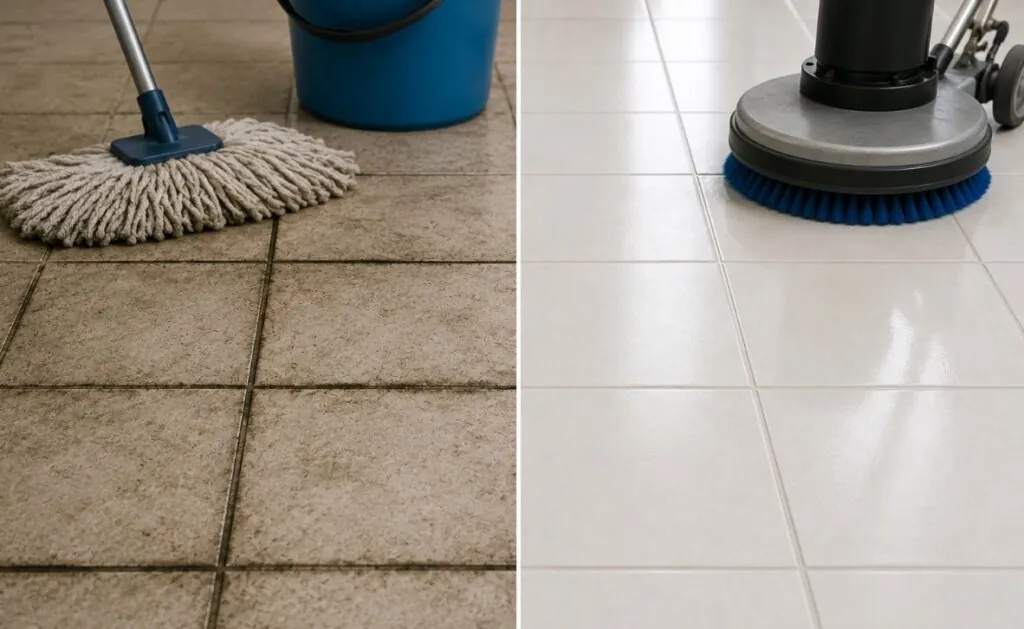
Mopping is designed for maintenance. It handles loose soil, fresh spills, and light daily contamination, but it does not always reach buildup packed into recessed grout joints or textured tile. Once that buildup becomes established, another pass may improve the surface temporarily without removing what is causing the dark lines.
This is where commercial tile grout cleaning becomes restorative work rather than another maintenance pass. Renue Hawaii describes a process using cleaning chemistry, mechanical agitation, and extraction to remove embedded soil, grease, sand, residue, and dirty solution from high-traffic floors.
For busy properties, the payoff is practical:
- cleaner-looking tile and grout;
- easier routine maintenance;
- fewer appearance-related complaints;
- delayed regrouting or replacement when the floor is still sound.
Mopping maintains the floor. Deep cleaning resets its condition.
Why Grout Darkens Before the Tile Does
Tile and grout sit beside each other, but they do not hold soil in the same way. The Tile Council of North America notes that grout can absorb soap as well as stains. TCNA also explains that grout joints are commonly lower and more porous than tile, so dirt tends to become visible in the joints first.
That difference matters in entrances, restrooms, kitchens, corridors, and other high-traffic areas. Fine particles can settle into low joints, while residue can remain after wet cleaning if rinsing is incomplete.
Did you know? TCNA warns that even an alkaline cleaner can leave a sticky soap film when it is not rinsed properly, and that film can attract dirt.
Dark grout can therefore be a soil-and-residue problem rather than proof that the entire floor needs replacing.
What Deep Cleaning Changes
Deep cleaning is not simply mopping with a stronger chemical. Restorative cleaning changes how soil is loosened, agitated, rinsed, and removed. TCNA says its preferred method for cleaning grout is to apply cleaner and then vacuum up the dirty water, highlighting the importance of removing contaminated solution after soil has been released.
A professional process may include:
- dry-soil removal before wet work;
- chemistry matched to the surface;
- mechanical agitation along grout joints and textured areas;
- rinsing and extraction of loosened soil and cleaner.
Using dry-soil removal, cleaning solution, agitation, and high-pressure extraction provides a cleaner baseline for everyday maintenance. Deep cleaning cannot repair cracked tile, missing grout, or failed joints, but it can show whether the main problem is removable buildup or actual physical damage.
Routine Mopping and Restorative Cleaning Do Different Jobs
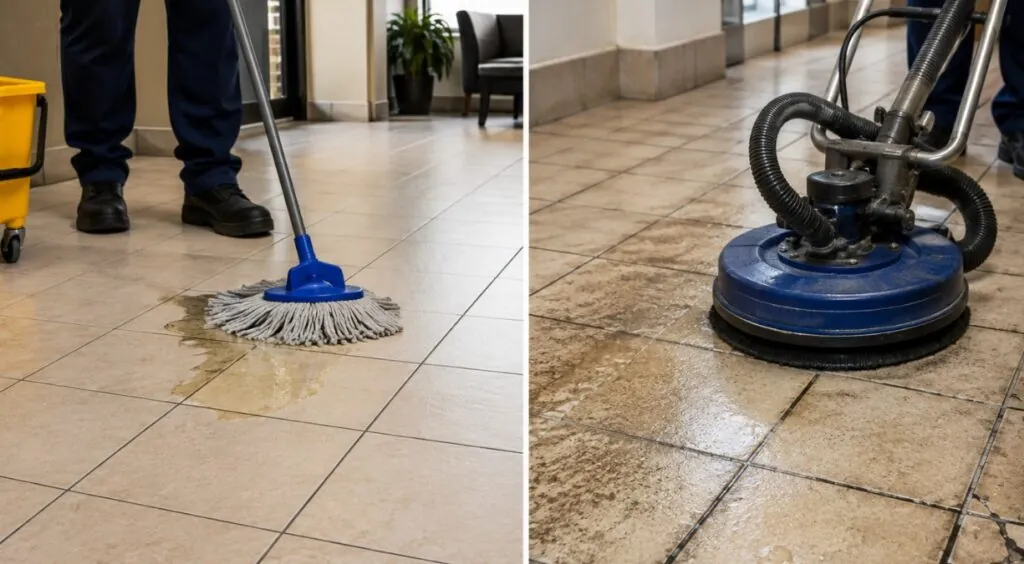
Mopping and deep cleaning are not competing methods. They solve different problems, so the right choice depends on what is actually happening to the floor.
| Method | Best use | Main limitation |
| Daily mopping | Fresh spills and light soil | Limited effect on embedded buildup |
| Machine scrubbing | Moderate soil over larger areas | Dirty solution still needs removal |
| Deep cleaning + extraction | Dark grout, grease, residue | Requires planned access and drying |
| Repair or replacement | Cracked tile or failed grout | Higher cost and disruption |
Here’s the thing: appearance alone does not tell you which option is necessary. If grout is intact but dark, restorative cleaning is a reasonable first step. If joints are cracked, missing, or failing, cleaning will not correct the underlying damage.
Use the Right Chemistry Before Reaching for Something Stronger
A harsher product is not automatically a better grout cleaner. The American Cleaning Institute notes that grout is primarily cement-based and recommends alkaline cleaners because acids can dissolve cement grout over time. ACI also advises allowing the product time to work before agitation, followed by rinsing.
Before using a product, check:
- whether it is intended for the specific tile and grout;
- dilution and dwell-time instructions;
- whether thorough rinsing is required;
- compatibility with sealers or natural stone.
Do not use oil- or wax-based cleaners because grout can absorb these products and retain a film.
This matters because poor cleaning chemistry can create a new maintenance problem while trying to fix the old one. If the floor material, grout type, or previous sealer is uncertain, test a small inconspicuous area before treating the whole floor.
Stop Bringing So Much Soil Onto the Floor
Cleaning becomes easier when less dirt reaches the floor in the first place. The 2006 pilot study, published in Science of the Total Environment, tested wet and dry soil transferred from footwear onto hard vinyl flooring. In one-time track-in experiments, most deposited test soil was left within the first five strides. Under repeated tracking conditions, contamination could spread much farther.
That makes entrance control a practical part of floor care:
- use effective entrance matting;
- remove dry grit frequently;
- clean mats before they become overloaded;
- give entry zones more attention than low-traffic areas.
The research was a pilot experiment using vinyl floor tiles, so its results should not be treated as a universal prediction for every tile floor or building. What it clearly demonstrates is that footwear can introduce and distribute outdoor soil across indoor hard flooring.
When Professional Tile and Grout Cleaning Is Worth It
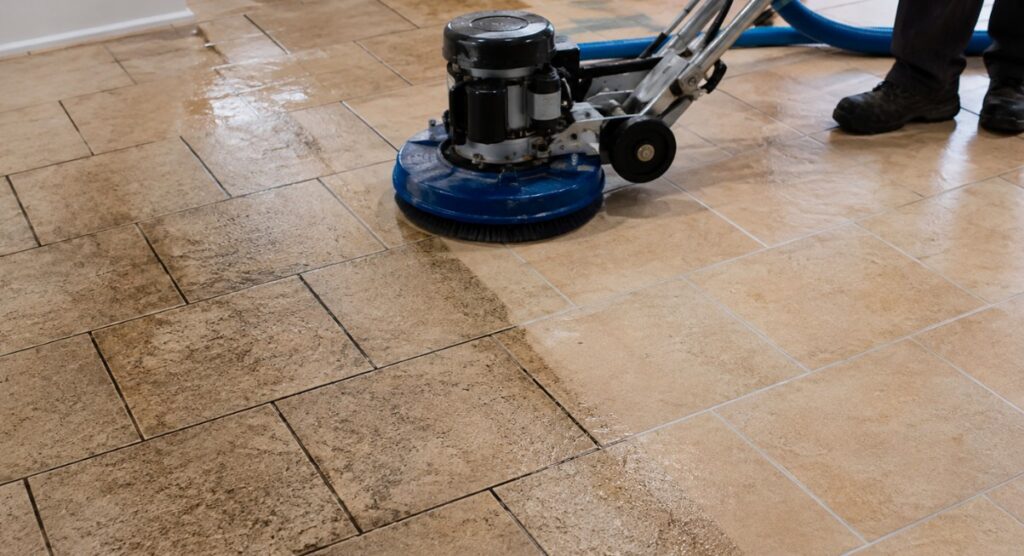
Professional tile and grout cleaning is worth considering when routine maintenance stops changing the condition of the floor. Dark traffic lanes that return quickly, textured tile that holds grime, or grout that stays visibly darker after proper cleaning can signal that a restorative clean should be considered.
After deep cleaning, protect the reset by removing dry grit before wet cleaning, using the correct cleaner concentration, changing dirty mop water, and rinsing whenever the product requires it.
Deep cleaning is a way to restore a cleaner appearance, improve daily maintenance, and extend the useful life of tile and grout before replacement becomes necessary.
The aim is not simply to clean more often. It is to make routine cleaning work better after the surface has been properly reset.
FAQs
1. Can dark grout be permanently stained?
Yes. Cleaning can remove soil and residue, but discoloration caused by wear, chemical damage, dyes, or long-term staining may remain. Some long-term discoloration or chemical staining may not be completely removable.
2. Should grout be sealed after every deep cleaning?
No. Whether sealing makes sense depends on the grout type, existing treatment, location, and sealer instructions. It should not be treated as an automatic step after every cleaning.
3. Can steam be used on every tile floor?
No. Tile, grout, sealers, adhesives, and adjacent materials can respond differently to heat and moisture. Check the recommendations for the installed materials and equipment before using steam.
4. Does clean grout have to return to its original color?
Not always. Removing accumulated soil does not reverse permanent discoloration. If grout is structurally sound but its color remains uneven after cleaning, other restorative options may need to be considered.
Start With a Reset, Not a Replacement
Dark grout lines do not automatically mean a tile floor is worn out. Often, routine maintenance is being asked to remove buildup it was never designed to handle. Start with two manageable changes: remove dry grit before wet cleaning, and make sure dirty solution is actually removed rather than redistributed.
If the floor still looks dull, sticky, or uneven, restorative deep cleaning is a logical next step before regrouting or replacement. A proper reset can improve appearance, make daily maintenance easier, reduce recurring complaints, and help a busy property get more useful service from tile and grout that are still in good condition.